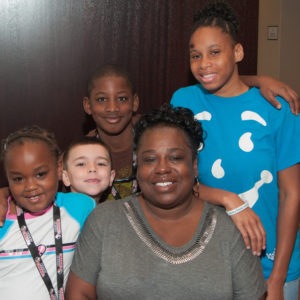
Children who experience early trauma learn to survive by not trusting their caregivers or the world around them. They become naturally defensive and face the daunting task of learning to trust once they are in the care of trustworthy parents. Caregivers face the huge challenge of keeping their minds and hearts open despite repeated experiences…
More
I have been parenting adopted kids for 28 years now. I’ve had the chance to raise 12 children (8 adopted) to adulthood. In addition, I’m connected with dozens of my former foster kids who were reunified with their birth parents. My experiences, especially those of my adult children and their birth families, have led me…
More
The most important property of humankind is the capacity to form and maintain relationships. These relationships are absolutely necessary for any of us to survive, learn, work, love, and procreate. The ability and desire to form emotional relationships is related to the organization and functioning of specific parts of the human brain—systems that develop during…
More
From the Winter 2010 issue of Adoptalk Hello! My name is Serena and I’d like to take you through the journey of my life so far. Unfortunately, it didn’t start out very well. I was born in Tennessee and doctors needed to detoxify me right away because of the drugs and alcohol in my system…
More
This article was originally published in Adoptalk, NACAC’s quarterly newsletter. Adoptalk is a benefit of NACAC membership. Learn more about becoming a NACAC member. Years ago, I was the social worker on two separate cases that disrupted the same year. With each set of parents I tried to explain a fundamental truth: relationship reciprocity and…
More
Ambiguous loss—a feeling of grief or distress combined with confusion about the lost person or relationship—is a normal aspect of adoption. Parents who adopt children with special needs may feel ambiguous loss related to what the child could have been had he not been exposed to toxic chemicals in utero, or abused and neglected after…
More
By Diane Riggs, NACAC Staff Note: Names in the article have been changed to protect families’ privacy. Sadie was just 18 months old when Irene and Hal Benson adopted her from foster care. From the start, though, Irene’s relationship with Sadie was “a roller-coaster ride.” Sadie left home at 16, lived on the streets, and…
More
When I ask children in my Adoption Playshop sessions what they like best and least about their family, their answers reflect the importance of sibling relationships—real, imagined, yearned for, or lived-at-a-distance. They speak of siblings with affection, sadness, anger, longing, resentment, envy, gratitude, guilt, or bitterness. No matter what they share, it is clear that…
More
by Deb Reisner, NACAC Staff When my husband and I adopted our first child 18 years ago, agency staff told us, “Take him home and love him. Everything will be fine.” Now we have five children and our family is a beautiful blend of African American, Native American, Latino, and European American races and cultures…
More
When my parents adopted in the early ’60s, society accepted adoption, but it was not something most adoptive parents (whose infants were matched with the family by skin, eye, and hair color) shared publicly. Today, parents who adopt children from foster care cannot pretend their children were always a part of the family, and most…
More
When a foster or adopted child has special needs, parents must juggle appointments with mental health therapists, occupational therapists, physical therapists, speech therapists, psychiatrists, ophthalmologists, allergists, and asthma specialists. They must attend IEP meetings, keep in touch with the school principal and their child’s teacher, check in with the social worker, and establish a schedule…
More
by Vicky McKinney, from Spring 2004 Adoptalk Suppose you had a brain tumor. Would you want an operation performed by someone who has only read about brain surgery or would you seek an experienced neurosurgeon? In our world of fetal alcohol spectrum disorder (FASD), treatment and care issues are similarly complicated, but some service providers…
More
People often ask me what they need to know to successfully adopt and parent older children. Well, I don’t have a magic answer (sorry, but I really don’t think there is one), but I do have some suggestions to make it easier. Be Prepared to Change When an older child joins the family, we need…
More
In a world where telephones and email dominate our interactions, we sometimes forget there are other ways to communicate. In the adoption world, particularly, communication without words takes on special meaning, and psychologists have given us a concept of non-verbal communication that makes an incredible amount of sense in the context of adoption. It is…
More
During the eight years my husband and I were foster parents, we (and our two young children) opened our hearts and home to 35 foster children ranging in age from three months to 16 years. Most were preschool age or a few years older, and most went back to their birth parents. Only five had…
More
Teens typically have an endless appetite for talking with friends, but when it comes to talking with adults or (even worse) parents, conversation often consists of one-syllable words, grunts, and eye rolls. When it comes to talking about adoption with some teens, parents might as easily climb Mount Everest. During adolescence, however, adopted teens need…
More
Children who are adopted or live in kinship or foster care bring with them an additional history and set of experiences when they enter the classroom. Part of that history includes many unknowns. No parent, child, or teacher would ever choose a public place like school to be a source of misunderstanding, misinformation, embarrassment, or…
More
This article was originally published in Adoptalk, NACAC’s quarterly newsletter. Adoptalk is a benefit of NACAC membership. Learn more about becoming a NACAC member. “I’m sorry Mr. and Mrs. Smith,” said the teacher in the voice mail message, “but I need you to come to school again. Joshua is having trouble in class.” It was…
More
“Why did you adopt?” The therapist asked my husband. Glancing at our four children, I offered a silent prayer and held my breath while we waited for the response. “We adopted because for us it was right–and that didn’t change just because the going got rough,” my husband responded. I exhaled; our shared sense of…
More
By Joseph Crumbley, D.S.W. Each night, without fail, she prayed for blue eyes. Fervently, for a year, she had prayed. Although somewhat discouraged, she was not without hope. To have something as wonderful as that happen would take a long time. Thrown, in this way, into the binding conviction that only a miracle could relieve…
More