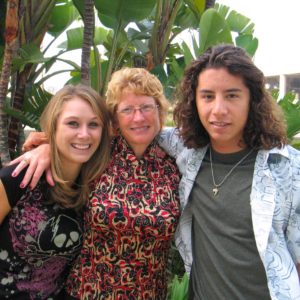
This informative webinar is designed for anyone parenting or providing services for LGBTQ children and youth in foster care, adoption, or relative care. Included is an overview of what we know about: LGBTQ youth in out of home care the impact of family rejection their struggle for inclusion and safety when in care lack of…
More
In the late 1990s child welfare leaders began to challenge the belief that attaining permanent families for preteens and teens was an impossible goal, and model specialized youth permanency services were developed across the country. Sadly many of the projects fell into disuse as initial funding sunset. In many cases, counties and states failed to…
More
At NACAC, we believe that every child and youth needs and deserves a permanent, loving family. Sadly, each year more than 20,000 youth age out of foster care without being connected to a legally permanent family. The articles below are designed to help child welfare workers and administrators consider how to make permanency a reality…
More
“You are never too old to be adopted,” said one young woman during an interview for a recently completed study on successful adolescent adoptions. “It´s the most important thing that happened to me,” said another adoptee. “I got a family and found love. I have everything one hopes for. I fit in a family.” These…
More
Janice Expecting a child who has lived through a disrupted adoption to believe in the permanency of a new parental commitment is a very tall order. Think about it: How many adults get hurt in a relationship and then walk confidently into the next one with an open heart and mind? Each time we…
More
Inside and Outside There was a time when my identity was that of an abused, neglected, and abandoned foster child. Sometimes I sense that the same lonely little girl still resides somewhere deep inside. However, I’m relieved to now have a cluster of other, more positive, identities: social worker, wife, mother, foster mother, adoptive mother, writer, and advocate…
More
by Catherine Sanders I came into the system in 2008 when I was 13 years old. At that time, my case plan was reunification. I knew from the start that I didn’t want to return to my biological mother. I constantly told my workers and everyone else involved in the case that, but no one…
More
Lexie entered foster care when she was 15 years old and aged out without finding a foster or adoptive family. She has become a vocal advocate for finding families for all children and youth in care. The article below is adapted from remarks Lexie gave at a briefing on Capitol Hill in September 2014 titled…
More
In 1999, the California Department of Social Services and Consortium for Children partnered to launch an innovative new program—Permanency Planning Mediation. The partners were looking for an effective way to use openness to shorten a child’s time in foster care by avoiding costly and time-consuming contested termination of parental rights hearings while also helping maintain…
More
From Summer 2012 Adoptalk According to the 2012 AFCARS report, close to 84,000 Hispanic or Latino children were in care at the end of fiscal year 2011. About 22 percent (almost 23,000) of those children were waiting to be adopted. Of the 50,516 children who found adoptive families in 2011, 21 percent (10,757) were…
More
Think back to when you were leaving high school and starting college. What did you do in the summer? Attend cookouts and other events with your family? Sleep in and hang out with friends? Work to earn money for school? What about the 20,000 youth in foster care who age out each year. How do…
More
from Summer 2011 Adoptalk “He’ll never amount to anything.” Would those words destroy or motivate you? For me, the words simply seemed true; I should be a failure. Statistics would predict that I’m in prison, but that wasn’t my destiny, was it? Who can know for certain if I will amount to anything, and why…
More
This NACAC publication identifies key policy and practice barriers to the adoption of older children and youth. It also makes recommendations for changes that will ensure that more older children and youth achieve permanence. The publication also highlights existing policies and programs that are helping more older children find permanence through adoption. Download a PDF…
More
The bond between parents and children, even in families where abuse and neglect occurs, can be quite strong. Children who enter foster care after spending years with their birth family never forget their family of origin, and some never lose the primal desire to return home. For teens in foster care who lack other permanency…
More
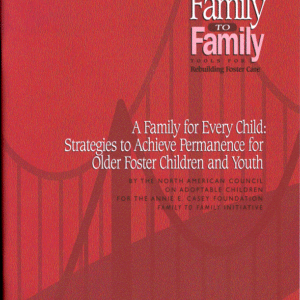
This publication describes characteristics of older waiting children and identifies barriers that are keeping children and youth in care. Then it provides detailed steps that child welfare administrators and workers can take to replicate successful youth permanency efforts. Download a PDF…
More
Spring 2005 Adoptalk According to the Children’s Bureau, a child’s chance of being adopted dramatically drops once he or she is within a few years of adolescence. It is also commonly understood that teens who age out of care face a very uncertain future. To address the need to seek stable homes for older…
More